



Is It Better to File Taxes Early or Wait Until Tax Day?
Every year, taxpayers face the same question: should you file your taxes as soon as possible, or is it smarter to wait until closer to the deadline? The short answer is that filing early is best for most people, but waiting can make sense if your income is complex, documents aren’t complete, or you need extra time to plan strategically. Ultimately, the key isn’t speed. It’s accuracy, timing, and managing risk.
Filing Taxes Early: When It Makes Sense
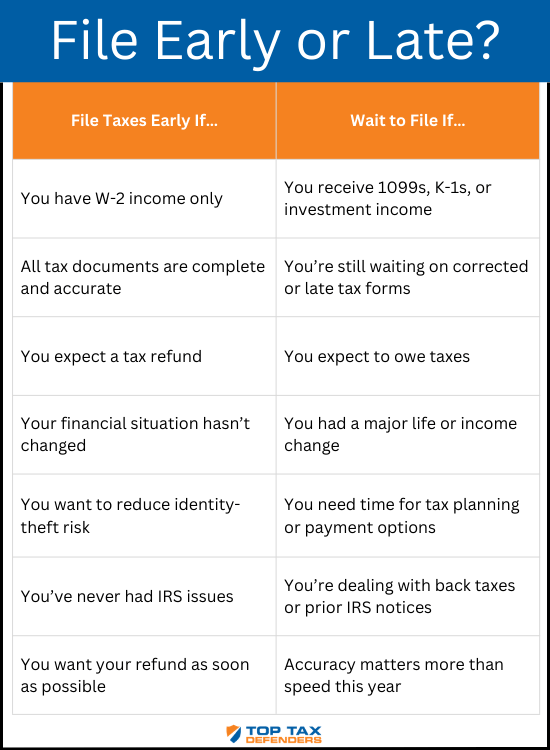
Filing early tends to work best for those with straightforward, well-documented finances. Taxpayers who rely primarily on W-2 income, have no complicated deductions, and expect a refund often find that submitting their return sooner rather than later comes with significant benefits. Early filing can lead to faster refunds, lower the risk of identity theft, and provide ample time to catch any mistakes before they become problems. It also removes the stress of scrambling as the April deadline approaches.
Even if your taxes feel simple, taking a moment for a professional review can prevent unnecessary IRS notices or delays. For many, the peace of mind that comes with knowing everything is accurate and complete is worth filing early.
When Waiting to File Can Be Strategic
For other taxpayers, waiting to file can actually be the smarter choice. This is often the case when income is more variable or complex, such as freelance earnings, investment income, or business profits. If you’re still waiting on corrected forms like 1099s or K-1s, or if a major life change has affected your finances, filing too early can lead to mistakes that require amended returns and may delay refunds.
Similarly, if you expect to owe taxes, waiting can give you time to plan for payments, explore penalty relief, or implement strategies to reduce your tax liability. Taxpayers with unresolved IRS issues or prior notices often benefit from taking extra time to ensure their filing is accurate and defensible. In these situations, delaying a return is not about procrastination. It’s about making sure your numbers are correct and your options are fully considered.
Is It Better to File Early or File Accurately?
The truth is, accuracy always outweighs speed. Even an early return that contains errors can trigger IRS letters, audits, refund delays, penalties, or interest. For taxpayers facing complex circumstances, a well-prepared return filed slightly later is almost always safer than a rushed early filing.
What If You’re Not Ready by Tax Day?
If you’re not ready by tax day, filing a tax extension can offer valuable breathing room. An extension gives extra time to compile paperwork and prepare a complete, accurate return, although it does not delay payment of any taxes owed. For those navigating complex finances or unresolved tax issues, this can prevent costly mistakes and unnecessary stress.
A tax extension:
- Gives you extra time to file paperwork
- Helps avoid late-filing penalties
- Does not delay payment for taxes owed
Extensions are commonly used by taxpayers with complex finances or unresolved tax issues.

Best Time to File Taxes: A Quick Decision Guide
For most people, filing early works best when all tax documents are complete, a refund is expected, and the financial situation is stable. On the other hand, waiting may make sense if you owe taxes, have complicated income, or are dealing with prior IRS concerns.
File early if:
- Your income is fully documented
- You’re expecting a refund
- Your tax situation hasn’t changed
Wait or plan strategically if:
- You owe taxes
- Your income is complex
- You’ve received IRS notices before
How To Choose the Right Filing Strategy
The right timing and strategy for filing varies based on each person’s unique financial situation. Whether you’re filing early, waiting strategically, or managing IRS challenges, ensure your return is accurate, compliant, and optimized to minimize risk.
If you’re facing back taxes, IRS letters, or other tax complexities, schedule a free consultation with our tax experts to review your situation and options.