


[Editor's Note: This article was originally published in February 2014 but has been updated for accuracy and comprehensiveness.]
How can I use my W-4 form to increase my paycheck or avoid tax debt?
If your tax refund was lower than expected (or you ended up owing the IRS) you may not be withholding the right amount of federal tax from your paycheck. On the other hand, if your refund was unusually large, you could be having too much tax withheld, reducing your take-home pay throughout the year.
In many cases, the issue isn’t your income or deductions. It’s an incorrect or outdated Form W-4.
Adjusting your W-4 allows you to control how much tax is withheld from each paycheck, helping you EITHER increase your take-home pay now or set yourself up for a larger tax refund later.
Since the IRS redesigned the W-4 starting in 2020, many taxpayers are still using outdated assumptions about allowances and withholding. Below, we explain how the W-4 works today and how to adjust it to better align your paycheck and tax outcome.
What Is a W‑4 Form?
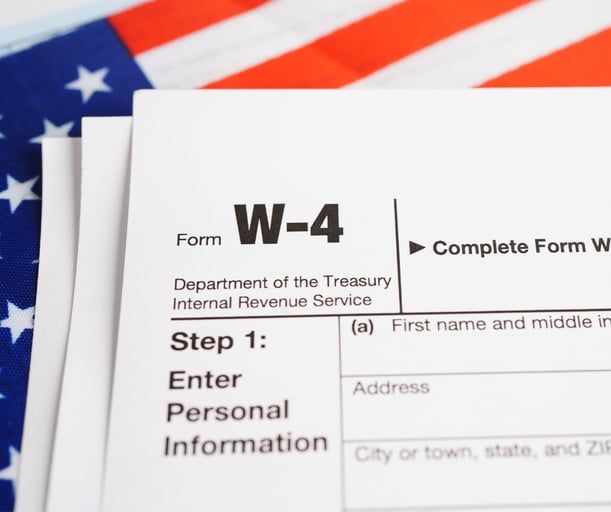
Form W-4, Employee's Withholding Certificate, tells your employer how much federal income tax to withhold from each paycheck. Employers use this form, along with IRS withholding tables, to calculate your payroll tax deductions.
You typically complete a W‑4 when you start a new job, but you’re allowed to update it at any time. Your employer cannot give you tax advice, but they must apply the most recent W‑4 you submit.
Important: W‑4 Rules Changed After 2020
Older W‑4 forms relied on withholding allowances. Current W-4 forms no longer use allowances at all. Instead, the modern W‑4 uses dollar amounts and household information to calculate withholding more accurately.
If you haven’t updated your W‑4 since before 2020, it’s worth reviewing it, even if your life circumstances haven’t changed.

Why Adjusting Your W-4 Can Increase Your Paycheck or Tax Refund
You should review or update your W‑4 whenever your income or household situation changes, including:
- Getting married or divorced
- Having or adopting a child
- Starting or losing a second job
- Significant income increases or decreases
- Changes in eligibility for tax credits or deductions
Failing to update your W‑4 after these events can easily lead to under‑withholding and unexpected tax debt.
For example, if you add a second job and don’t adjust your withholding, each employer may withhold as if that job is your only income, often resulting in a tax balance due at filing time.
.png?width=750&height=629&name=Paycheck%20vs.%20Tax%20Refund%20What%20Adjusting%20Your%20W-4%20Really%20Does%20(2).png)
How to Adjust Your W-4 to Increase Your Paycheck or Tax Refund
You can request a new W-4 from your employer’s payroll department or complete it through your employer’s HR or payroll system. Any changes you make directly affect how much federal income tax is withheld from each paycheck, meaning they can increase your take-home pay now or increase your refund at tax time.
Here’s how the current form works:
Step 1: Filing Status
Choose Single or Married filing separately, Married filing jointly, or Head of Household. This choice affects your standard deduction and withholding rate.
Tip: Married taxpayers with two incomes often under‑withhold if they don’t account for both earners. The W‑4 includes a checkbox and worksheet to address this.
Step 2: Multiple Jobs or Working Spouse
If you (or your spouse) have more than one job, you’ll need to account for that income here. This is one of the most common sources of tax surprises.
Step 3: Dependents and Credits
Instead of allowances, you now enter estimated dollar amounts for qualifying children and other dependents. This directly reduces withholding.
Step 4: Other Adjustments (Optional)
This section allows you to:
- Increase withholding if you expect other taxable income (interest, freelance work, investments)
- Reduce withholding if you plan to itemize deductions
- Request extra withholding per paycheck if you want to avoid owing taxes
Step 5: Sign and Submit
Once submitted, your employer will apply the changes going forward. Updates usually take effect within one or two pay periods.
Use the IRS Withholding Estimator
The IRS offers a free Tax Withholding Estimator that can help you fine‑tune your W‑4 based on your actual income, deductions, and credits.
This tool is especially useful if you work multiple jobs, are self‑employed on the side, have variable income or bonuses, or owed taxes or received a very large refund last year.
Bigger Paycheck vs. Bigger Refund: What Adjusting Your W-4 Really Does
Adjusting your W-4 doesn’t change how much tax you owe for the year. It changes when you get your money.
- Reduce over-withholding to increase your paycheck
- Increase withholding to receive a larger tax refund
A very large refund usually means you gave the IRS an interest-free loan, while under-withholding can lead to penalties and surprise tax bills. The right balance depends on your cash-flow needs and risk tolerance.
That said, some taxpayers intentionally over‑withhold to avoid the risk of IRS penalties. The “right” approach depends on your financial situation, risk tolerance, and cash‑flow needs.
When to Get Professional Tax Help
If you’ve adjusted your W‑4 but still owe back taxes, are facing IRS notices, or have complex income sources, it may be time to talk with a tax professional.
At Top Tax Defenders, we help taxpayers:
- Correct withholding issues
- Resolve IRS back tax balances
- Address penalties and interest
- Create long‑term tax strategies to avoid repeat problems
If you're worried about owing the IRS, or already do, don't wait.
Schedule a free consultation with our tax experts to review your situation and options.